The large consultancies
whose methods are sound, but whose fees and team sizes are cut for a different scale of business.
Lyon · France · Europe
Tackling each issue in isolation is the surest way to create new ones: silos harden, decisions cancel each other out from one department to the next, and inertia sets in while everyone waits for someone else to call it.
A margin that is slipping is rarely a purely commercial problem. A team that has lost its drive is rarely the sole cause of it. A tool that disappoints is rarely a technical problem. Causes travel from one area of the business to another: we deal with them together, at the scale of your company, for results that last.

The large consultancies
whose methods are sound, but whose fees and team sizes are cut for a different scale of business.
Novexys
exists to close that gap:
The specialist independents
who handle one subject well (an audit, a process, a plan), but rarely the system it sits within.
A pragmatic approach, built for companies that need results quickly.

See the business as it actually works, not as it is described. Interviews at every level, time on the ground, data, customers, processes.
Identify the levers that will genuinely make a difference. Priorities, trade-offs, a roadmap, clear ownership and measures.
Move quickly, working with your teams rather than in their place. Phased rollout, measured results, adjustments along the way.
Results are measured, not assumed. Indicators tracked, gaps corrected, gains embedded in day-to-day practice rather than in an action plan.
A business that has been turned around also has to be ready for what comes next: a three-year trajectory, capabilities to build, scenarios thought through.
“The engagement has succeeded when the strategy is clear, the plans are written, and your teams can carry on without us.”
A few examples of engagements led, with their results and some of the levers used.
−25%
+5%
Operating profit, in 20 months.
A business that had been loss-making for ten years.
Strategy and operating model rebuilt, operating cycle tightened, new governance, new culture, new leadership team, offer repositioned, digitisation and outsourcing. The engagement closed with the selection and appointment of the new managing director.
3%
13%
Operating profit, over 6 years, and revenue tripled.
Industrial group, French subsidiary to be rebuilt from the ground up.
Strategy, governance and culture redefined, the offer–customer fit sharpened, strategic partnerships and innovations, international expansion, digitisation and new channels opened, through to recruiting the new managing director who would take it on from there.
EBITDA negative
positive
In 16 months, under private-equity ownership.
Industrial group, distribution subsidiary.
Range and logistics footprint rationalised, sales and marketing organisation rebuilt at head office and in the field, category captain position won back, new partnerships, and a new sales director selected and installed to carry it forward.
Transformations led in France, across Europe and in West Africa, in industrial, commercial and international settings.
A P&L is never repaired for good by cutting costs. It is repaired when the company starts selling the right things again, to the right customers, at the right price, and when its organisation stops consuming the margin it produces.
From one turnaround to the next, the levers are much the same.
Redefine the vision and the strategy, to make the direction clear.
Rethink the processes and the operating model, to make them more effective and more self-sufficient.
Engage and re-energise every team and the wider ecosystem, above all its customers.
Cost reduction is one of them, but on its own it has never been enough.
This is where digital and artificial intelligence can also change the picture.
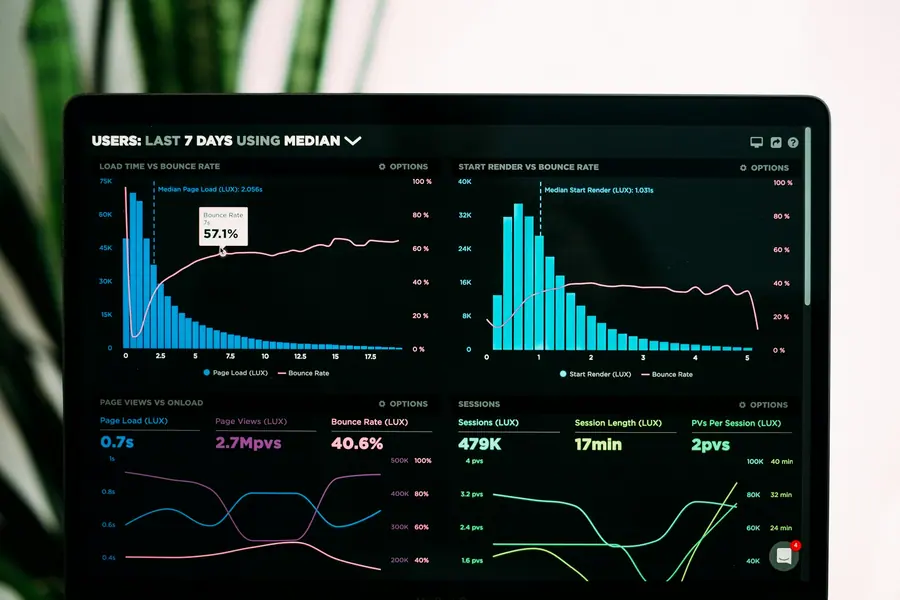

The time freed up is not saved, it is put back where it counts: on customers, on quality, on decisions.
All of it, work no one was doing, for lack of time.

“Cutting costs is one option among several. A turnaround comes from putting the company back on the best growth path open to it.”
6Areas of expertise
Establish where value is being lost, and by how much. Restore margin, strip out whatever costs without paying its way, rebuild performance management you can trust, and bring the organisation back to the size of the business.
For a loss-making business, profitability that is eroding, or a deadline set by a shareholder.

Reach the next level rather than repair the current one. Rethink the offer and the customers it is built for, overhaul the marketing and communications that carry it, open up distribution channels, build the partnerships that are missing, structure the sales force, move into new markets.
For a company that is doing well but has plateaued, or that has room to grow faster than it currently does.
Clarify the vision and turn it into a plan you can genuinely commit to. Organisation, governance, processes, accountabilities, with adoption tracked as closely as the technical indicators.
For growth that has outrun the organisation, a merger to lead, or decisions that never translate into results.
Map the tools and the points where they break down, make the numbers behind your decisions dependable, automate what is stable. Qualify the AI use cases that genuinely hold up in your context, and set the rules that govern them.
For a company that has yet to get its data in order, that is exploring what AI could do without knowing where to start, or that needs to rethink roles and governance in the face of automation.
Make the business transferable before putting it on the market: reduce its dependence on the leader and on key people, write down what exists only in people’s heads, set out delegated authority, make the numbers reliable.
For a sale envisaged twelve to eighteen months out, a family handover, or the arrival of an investor.

Working alongside the leader on the decisions that cannot be opened up internally: an outside view to help make the call, take a step back, or build the structure that will absorb the next surprise.
For a leader facing a decision they cannot share internally, who needs to build structure against the unexpected, or who is looking for regular space to think.

3Diagnostics
Interviews at every level, not only with the executive committee. A quantified picture of where things stand, the real causes behind the symptoms, and priorities ranked in order.
You come away with a report of some twenty pages, a presentation to your executive committee, and a roadmap where every line has an owner.
The same approach, applied to your information systems: a map of your tools and of the points where they break down, how dependable your numbers really are, your exposure to risk, the regulatory obligations that apply, and the artificial intelligence use cases that genuinely hold up in your context.
You come away with a three-stage trajectory (put right, equip, augment), costed and sequenced. The first stage often part-funds itself out of the savings it releases.
A question rarely asked early enough: if your company went on the market in eighteen months, what would bring the price down or make a buyer walk away?
We examine what an acquirer will examine: how far the business depends on you and on key people, what is written down nowhere, how reliable the numbers are, how authority is delegated, how concentrated the customer portfolio is, and the state of the digital foundations.
You come away with the points that weigh on value, ranked, and the time it takes to deal with them. We do not look for buyers and we do not work on deal structuring: that belongs to your advisers, your lawyer and the specialist intermediaries. Our work comes before theirs.
3Going further
Solutions are designed with your teams, not in their place. Rollout is phased and measured, and adoption is tracked as closely as the technical indicators.
The engagement includes a defined handover phase: it ends when your teams can carry on by themselves.
Taking operational charge, with responsibility for the P&L. For a subsidiary in difficulty, a post-acquisition situation, or the replacement of a leader.
The mandate includes choosing and preparing the person who will take over. That is how every turnaround led so far has ended: the company carried on, with someone else at its head.
An engagement or a retainer, shaped around the leader
Deciding better is not always enough: you also have to be structured enough to absorb the unexpected (a customer who leaves, a partner who digs in, cash that tightens overnight). The Leader’s Room is that space, at whatever rhythm suits the leader: a session to settle a decision before announcing it, or to build in the calm the reflexes and safeguards that will absorb the next shock rather than meeting it in the middle of a crisis.
You leave each session with a decision taken or clarified and, over time, with a capacity to cope that is genuinely your own.
Without exception, indirect arrangements included. That independence from suppliers is a condition of the value we bring, and we say so at the first meeting.
We scope, we select, we steer, we support adoption, and we build the first automations and the first agents ourselves, because a demonstration is worth more than a promise. Industrialisation, heavy integration and day-to-day operation belong with your teams or with a technical partner.
We bring in what the engagement requires, and nothing more. A successful engagement is one you no longer need: we would rather earn a recommendation than an annuity.
An hour is usually enough to understand the situation and decide whether an engagement makes sense, and in what form. The conversation stays between us, including when it concludes that nothing needs doing.
contact@novexys.com